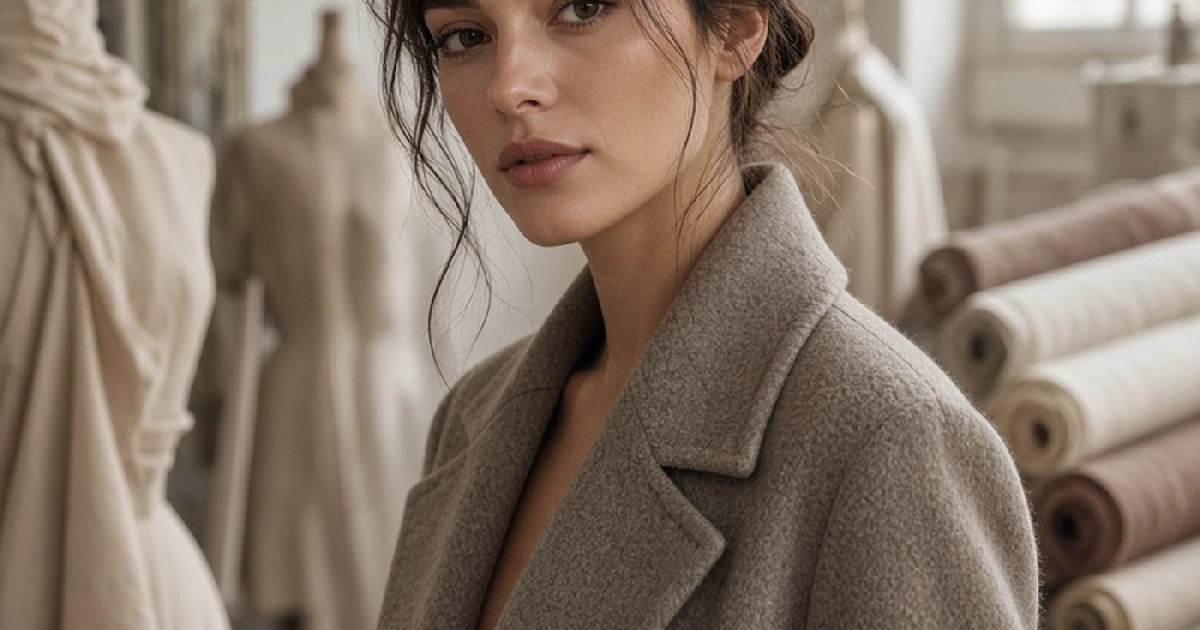
Cover casting inside a fashion atelier season
A magazine cover is cast long before the camera rolls. Inside a fashion atelier season, cover casting is a chain of fittings, references, and risk checks that decides whose face will carry cloth, campaign, and newsstand in the same frame.
This article is for fashion editors who need to understand how casting directors and ateliers build a cover face before shoot day — and where editorial pressure can break the process.
What “cover face” actually means
A cover face is not only beauty. It is a readable silhouette under masthead type, a neckline that leaves room for barcode and cover lines, and a presence that still feels like the house after retouch. Atelier teams care about proportion against cloth; casting directors care about availability, rights, and how the talent photographs under the planned light.
When those needs conflict, the cover usually loses texture first, then authorship.
The atelier’s casting loop
A typical season loop looks like this:
- Lookbook intent — the creative director names the cloth story (tailoring, drape, color story).
- Reference pull — casting builds a board of prior covers, campaign stills, and fittings — not influencer screenshots alone.
- Shortlist fittings — talent walks cloth under daylight and softbox so grain and shoulder line are honest.
- Rights pass — exclusivity windows, prior brand conflicts, and territory limits are checked before the hold becomes a booking.
- Cover test — a still or phone frame with temporary masthead type proves the face still reads.
Skipping the cover test is how teams discover, too late, that a strong campaign face disappears under a serif wordmark.
Where editors help — and where they hurt
Editors help when they bring clear cover-line length, barcode placement, and regional variants early. They hurt when they demand a viral face that cannot wear the season’s cloth, or when they treat casting as a last-minute swap after the set is built.
A useful editorial question is not “Who is famous this week?” It is “Who still looks like this atelier when the type is on?”
Signals that casting is healthy
- The shortlist includes at least one talent who has worn the house’s cloth on a runway or in a fitting.
- The photographer and casting director share the same light sketch before the booking.
- There is a written backup if the first choice’s exclusivity collapses.
- Cover lines are drafted against a test frame, not against a mood board alone.
Signals that casting is cosplay
- The only references are other magazines’ covers with different cloth stories.
- Talent is chosen from a social clip that never shows full-body proportion.
- Rights are “figured out later.”
- The atelier’s pattern team has not seen the shortlist before the hold.
How Cover Atelier desks should report it
Name the season, the cloth, and the light before naming the celebrity. Credit the casting director and the atelier fitting team, not only the star. Ask what was tested under masthead type. Treat last-minute swaps as process news, not gossip.
Cover casting inside an atelier season is craft logistics dressed as glamour. The face is the last thing the reader sees — and the first thing the process had to prove.